
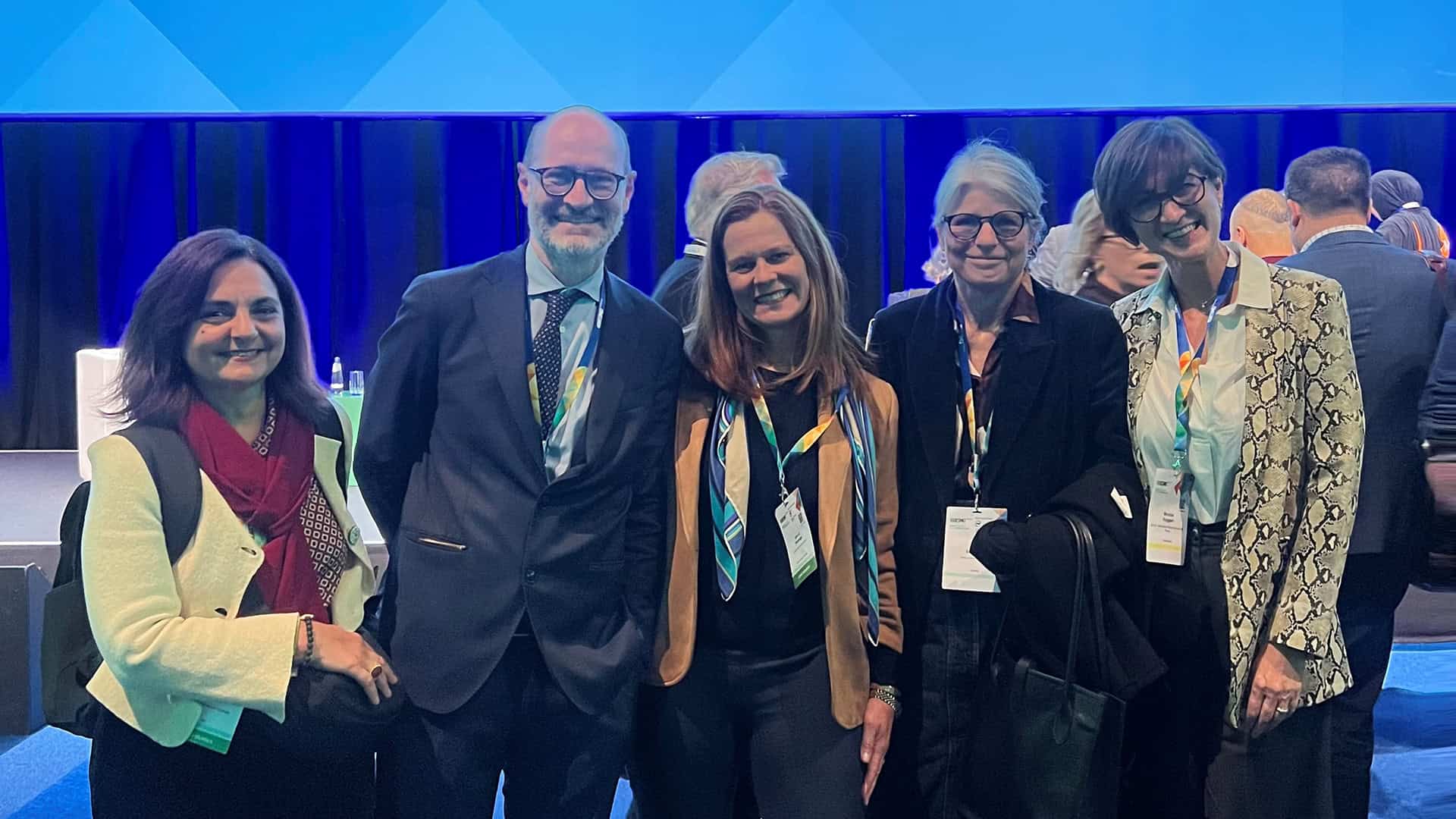
Grantee Spotlight: The POSITIVE Clinical Trial – Addressing Fertility After Breast Cancer
January 22, 2026
A Critical Gap
Each year, approximately 2.3 million women are diagnosed with breast cancer, and about 30% of them are premenopausal. Despite this significant proportion, premenopausal women have long been underrepresented in research – particularly when it comes to endocrine treatment and to their fertility concerns. As Prof. Beat Thürlimann, RTFCCR Vice-Chairman of the Board, emphasized, “pre-menopausal patients with breast cancer are understudied. They did not receive the attention they deserved because for 20 years, the endocrine treatment research mainly concentrated on postmenopausal women.”
Today, many young women choose to delay starting a family for various reasons. When they are diagnosed with breast cancer, they not only face the challenges of treatment, but also the uncertainty of fulfilling their desire to have children. Prof. Olivia Pagani, the International Study Co-Chair of the POSITIVE study, explained, “Many of the women diagnosed with breast cancer at age 30 do not have children yet, so when they face the disease, they face not only the toxicity of treatment and the fear of dying. They also face the question, ‘what should I do with my maternal desire?’ And this has never been addressed prospectively.”
The POSITIVE Study – a patient-centered approach to address fertility after breast cancer
The POSITIVE clinical trial was designed as an international, pragmatic, prospective, academic study to investigate whether interrupting adjuvant endocrine therapy to allow pregnancy is safe for women with early endocrine-responsive breast cancer.
“POSITIVE is a very special, out-of-the-box investigation,” said Prof. Thürlimann.
The trial enrolled more than 500 women, most of whom were from Europe, 20% from the US, and 16% from East Asia. To be eligible, women had to be under 42 years of age at diagnosis and have completed at least 18 months (but no more than 30 months) of endocrine therapy before treatment interruption.
Prof. Pagani highlighted the unique design: “One of the most important eligibility criteria is pregnancy desire. The second was, which kind of women should be enrolled? We thought of women with endocrine-responsive breast cancer because they are the majority, their prognosis is better, and many more taboos surround pregnancy in this group of patients.”
The protocol allowed up to two-year window for attempting pregnancy, including a three-month washout period to minimize the risk of drug toxicity to the fetus. Resumption of endocrine therapy after this period was strongly recommended, regardless of pregnancy outcome, to complete a total of five to ten years, according to individual risk and the patient’s preference.
Key Outcomes
- Safety for Mothers:
The primary endpoint—breast cancer-free interval— was not worse in women who interrupted endocrine therapy to attempt pregnancy, compared to an external control group who did not stop therapy.
Pagani summarized: “In POSITIVE, whether you became pregnant or not, the breast cancer-free interval is almost the same. In conclusion, this means that pregnancy is feasible after breast cancer and does not negatively impact your prognosis.”
At 71 months median follow-up, the results presented at ESMO remain robust:
- No significant difference in breast cancer-free interval or distant recurrence-free interval between women who interrupted therapy and those who did not.
- No significant difference in breast cancer-free interval between women who became pregnant and those who did not.
- The trial primarily enrolled women with early-stage, lower-risk disease, but also included women with larger tumors or a less favorable prognosis.
The study also showed that the use of assisted reproductive procedures is effective and is not associated with worse prognosis in women with hormone-responsive disease, challenging previous taboos and misconceptions.
- Safety for Offspring:
Among the women who became pregnant—about 76% of the participants— Prof. Pagani said, “The pregnancy complications were not higher than what is expected in the general population of the same age, and the same is true for the birth complication rates of the offspring.”.
Breastfeeding was feasible and did not affect cancer outcomes.
- Adherence to Therapy: “So far, 82% of the patients who were expected to resume endocrine therapy have done so. The vast majority did start their treatment again,” stated Prof. Pagani.
Impact and Limitations
The POSITIVE trial provides the most robust prospective data on the safety of pregnancy after breast cancer in young women with endocrine-responsive disease to date.
Prof. Thürlimann emphasized: “We have to acknowledge that this is not a gold standard, but it is the best, the most robust collection of data that has ever been collected related to the question, and it is a basis for counselling patients and doctors.”
However, the trial’s findings are most applicable to women under 40 with lower-risk, endocrine-responsive disease. As Prof. Thürlimann said, this trial is “not for the very young, it’s not for intermediate and high-risk patients, and not for those over 40.”
Looking Ahead
The POSITIVE study marks a significant advance in addressing the fertility concerns of young breast cancer survivors. Prof. Pagani concluded: “Over the years, we have improved the treatment of patients with breast cancer. We now have the responsibility to address the fact that they survive, and they want to live. They wish to return to work. They want to have a normal life. And pregnancy, for some women, is part of a normal life.”
The results of this study empower patients and clinicians to make informed decisions, moving beyond survival to support quality of life and personal aspirations. The POSITIVE results reassure physicians and young patients when discussing fertility, family planning issues, and adjuvant endocrine treatment.
RTFCCR is proud to support the POSITIVE study, which has to date accompanied 440 births. This clearly exemplifies patient-centered research design and scientific impact. Watch this video to learn about the patient partner impact throughout the trial: https://youtu.be/WKb9GSpLwIM
Congratulations to all the collaborators and patients who made this work possible!
To learn more about the POSITIVE trial results:
- Ann Partridge et al. Interrupting Endocrine Therapy to Attempt Pregnancy after Breast Cancer. N Engl J Med 2023;388:1645-56. DOI: 10.1056/NEJMoa2212856
- Hatem A. Azim et al. Fertility Preservation and Assisted Reproduction in Patients With Breast Cancer Interrupting Adjuvant Endocrine Therapy to Attempt Pregnancy. J Clin Oncol 42, 2822-2832(2024). DOI:10.1200/JCO.23.02292
- Peccatori, Fedro A et al. Breastfeeding After Hormone Receptor-Positive Breast Cancer: Results From the POSITIVE Trial. Journal of Clinical Oncology: official journal of the American Society of Clinical Oncology vol. 43,24 (2025): 2712-2719. doi:10.1200/JCO-24-02697