
Amplifying Patient Voice in Early-Phase Trials: Insights from Patient Expert Roundtable during ASCO 2026
July 9, 2026
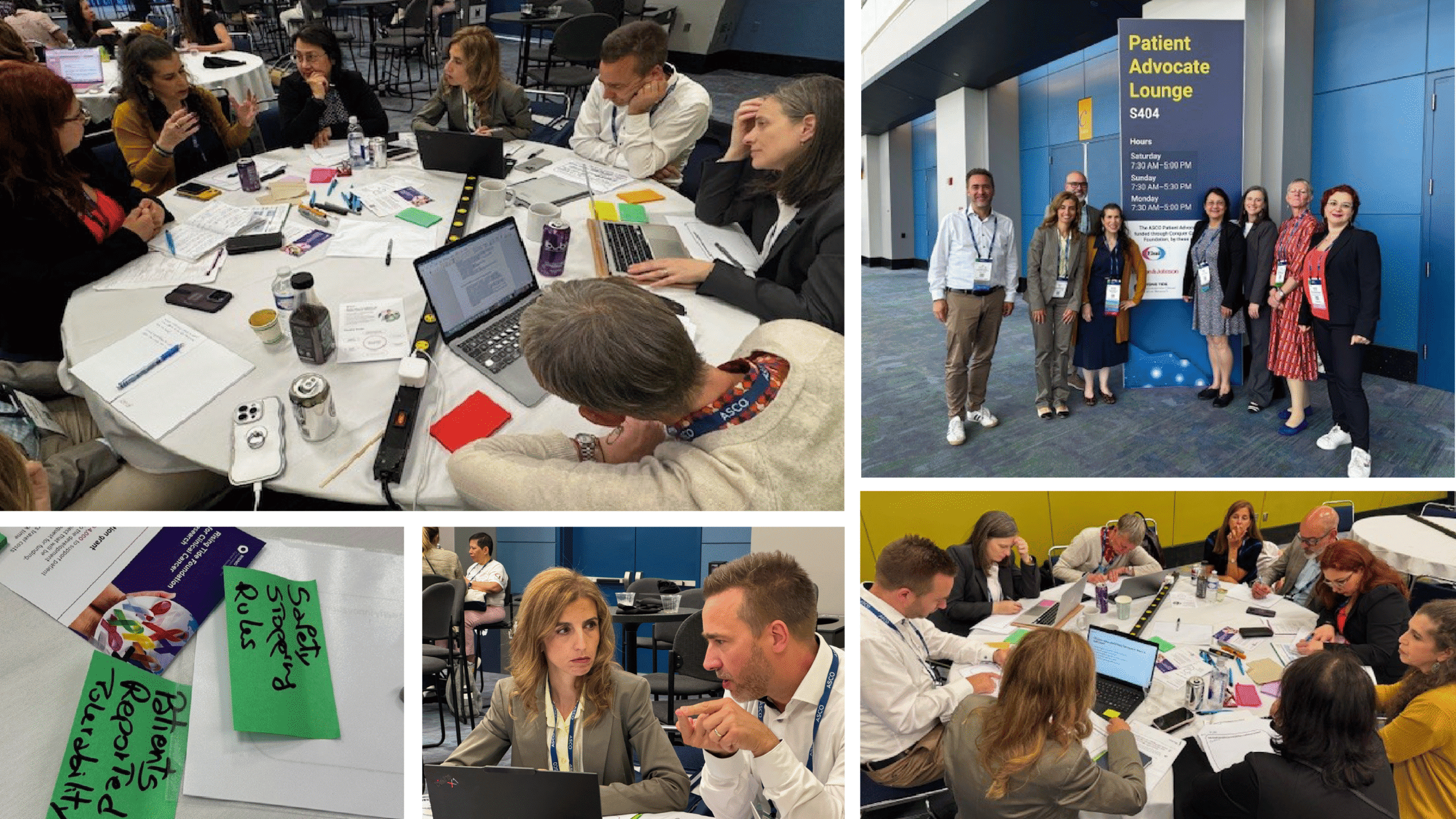
Rising Tide Foundation for Clinical Cancer Research (RTFCCR) convened a Patient Expert Roundtable during ASCO 2026 in Chicago, bringing together leading patient advocates to explore how patient perspectives can more meaningfully shape early-phase clinical trials.
Early-phase trials (Phase I–II) are where many of the most critical design decisions are made- including endpoints, eligibility criteria, and trial burden. Yet, these decisions are often taken without sufficient patient input. The roundtable focused on how and when to integrate patient perspectives to ensure that funded research reflects what truly matters to patients.
The discussion highlighted a persistent gap in current practice. Despite the importance of patient experience, patient-reported outcomes (PROs) remain underused in early-phase trials, and safety assessments rely heavily on clinician-reported data. This can result in an incomplete understanding of treatment tolerability, symptom burden, and real-world feasibility.
Participants emphasized three priority areas where patient input is particularly critical:
- Endpoints, to ensure trials measure outcomes that are meaningful to patients, such as daily functioning and quality of life
- Eligibility criteria, to improve representativeness and real-world relevance
- Trial burden and feasibility, including the impact on both patients and caregivers
A key takeaway from the discussion was clear: patient involvement in early-phase trials is not supplementary, but essential to generating meaningful, reliable, and applicable evidence. Integrating patient perspectives early in study design can improve not only the patient experience, but also scientific robustness, trial feasibility, and decision-making.
Importantly, the roundtable moved beyond identifying challenges to defining practical solutions. Participants outlined concrete ways to embed patient input into funding and research processes, including:
- requiring evidence of patient-informed decision-making in study design
- integrating PRO-based tolerability assessments alongside clinician-reported data
- involving patient partners throughout the study lifecycle, from design to dissemination
This work highlights a clear opportunity for RTFCCR to play a leadership role. By embedding patient-informed criteria into funding decisions, the foundation can use its position as a funder to influence how trials are designed – shifting the culture of early-phase research toward a more patient-centred approach.
Ultimately, ensuring that patient perspectives are integrated from the earliest stages of clinical research is critical to developing treatments that are not only scientifically sound but also meaningful and relevant to the people they are intended to serve.
By setting clear expectations as a funder, RTFCCR can help redefine what high-quality clinical research looks like – placing patients at its core from the very beginning.